How to Keep Your Tent Warm in Winter Without Electricity: A Real-World Guide

I’ll never forget the first time I truly understood what “cold” meant. It wasn’t on a ski slope or a windy city street. It was 3:00 AM in a nylon tent, somewhere in the Adirondacks. The temperature had dropped unexpectedly to single digits, my water bottle was frozen solid, and I was shivering so violently I thought I’d shake the tent stakes loose.
I spent that night doing crunches in my sleeping bag just to generate enough heat to doze off for twenty minutes at a time. It was miserable. But it was also a turning point.
I learned the hard way that winter camping isn’t just “summer camping with a warmer coat.” It’s a completely different beast. But here’s the secret: you don’t need a propane heater or an electric site to be comfortable. In fact, relying on those things can be dangerous.
If you want to know how to keep your tent warm in winter without electricity, you have to stop thinking about adding heat and start thinking about trapping it.
Whether you’re planning a snowy backpacking trip or just want to extend your car camping season into late November, this guide covers the science, the gear, and the weird little tricks that actually work when the mercury drops.
The Physics of Freezing: Why Your Tent Gets Cold
Before we get into the gear, we have to talk about the science. It sounds boring, I know, but understanding how you lose heat is the only way to stop it. When you’re shivering in a tent, you are fighting a three-front war.
1. The Ground (Conduction)
This is the silent killer of a good night’s sleep. The ground is a massive heat sink. It has infinite thermal mass compared to your body. If you lay directly on the cold earth, conductive heat loss will suck the warmth right out of you, no matter how fluffy your sleeping bag is. You could sleep in a bag rated for Everest, but if you’re on the bare ground, you will freeze.
2. The Wind (Convection)
Wind chill is real. If cold air is constantly stripping away the thin layer of warm air your body generates, you can never get ahead of the curve. Your tent is your shield against this, but only if you set it up right.
3. The Escape (Radiation)
Your body is a radiator, pumping out heat constantly. In a house, the walls and insulation bounce that heat back to you. In a tent, that heat tries to escape through the thin fabric and into the night sky. Your job is to catch that heat before it leaves.
Site Selection: Don’t Set Up in the Freezer
Most people fail before they even unpack their bag because they pick the “prettiest” spot rather than the warmest one.
Avoid the “Cold Sink”
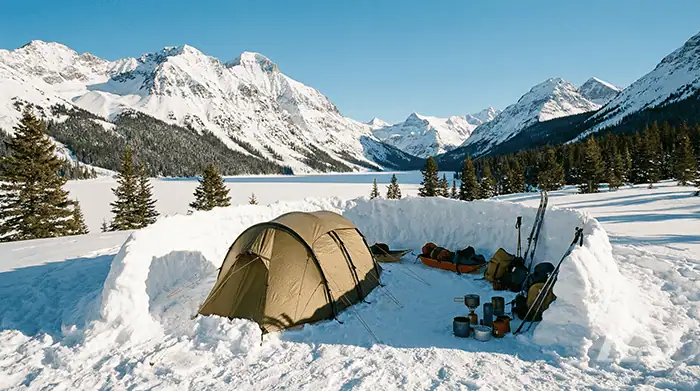
Cold air is heavier than warm air. As the sun sets, cool air flows down hills and settles in valleys, basins, and riverbeds. It might look picturesque to camp right next to that frozen lake in the valley floor, but you are essentially setting up camp in a refrigerator.
- The Fix: Move up the hill. Camping just 50 feet higher than the valley floor can result in a temperature difference of 5 to 10 degrees. Aim for a flat shelf partway up a slope.
Find a Windbreak
You want to block the prevailing wind, but be smart about it. A dense stand of pine trees is excellent for blocking wind and actually traps a bit of radiant heat from the ground.
- The Warning: Look up. In winter, trees hold heavy snow and ice. Do not pitch your tent under “widowmakers”—dead branches that could snap under the weight of snow and fall on you while you sleep.
Chase the Morning Sun
Compass work isn’t just for hiking. Figure out where East is. If you can position your tent so it gets the first rays of the morning sun, your tent will turn into a greenhouse by 8:00 AM. That solar heat makes the difference between waking up in misery and waking up ready to tackle the day.
Insulating the Shelter: Building the Nest
If you are looking for winter camping tips, this is one of the big ones: Your tent offers zero insulation on its own. It is just a wind block. You have to build the insulation yourself.
The Ground Barrier
Start with a footprint under your tent to stop moisture. But the real magic happens inside.
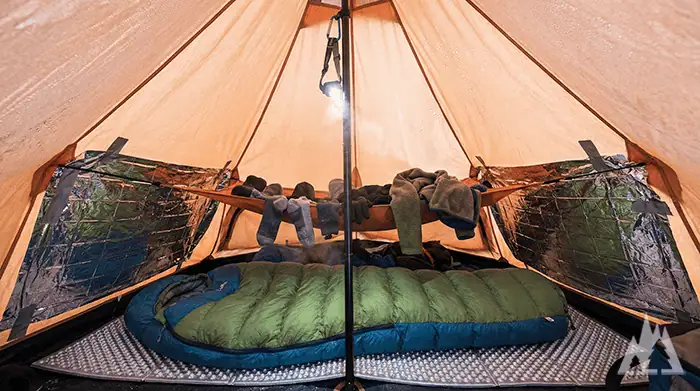
- Car Camping: Since weight isn’t an issue, bring those interlocking foam puzzle mats (the kind used in gyms or kids’ playrooms) or moving blankets. Cover the entire floor of the tent. This creates a thermal break between you and the frozen earth.
- Backpacking: Use your empty backpack, your sit pad, and even your spare clothes to create a layer under your sleeping pad. Every millimeter of distance from the ground helps.
Shrink the Room
Think about your house. It’s harder to heat a cathedral than a small bedroom. The same applies to tents. If you are sleeping alone in a 4-person tent, your body heat has to work overtime to warm up all that dead air space.
- The Fix: If you have a large tent, pile your gear—bags, boxes, coolers—around the inside perimeter. You are effectively making the room smaller and creating thick walls of insulation against the wind.
Ventilation is Non-Negotiable
This sounds insane, but you *must* keep the tent vents open, even when it’s freezing.
Here is why: You exhale about a liter of water vapor at night. If you seal the tent tight, that moisture hits the cold tent wall, turns to ice, and then “snows” down on your sleeping bag. Wet insulation = cold camper. You need airflow to carry that moisture out.

The Sleep System: Where the Magic Happens
You can have the best tent setup in the world, but if your sleep system is weak, you’re in for a long night. This is the one area where you shouldn’t scrimp.
The Pad is More Important Than the Bag
I cannot stress this enough. When people ask how to keep your tent warm in winter without electricity, I usually ask them about their sleeping pad, not their bag.
Sleeping pads have an “R-value” (insulation rating).
- Summer Pad: R-value of 1 or 2.
- Winter Requirement: R-value of 5 or higher.
If you don’t want to buy a $200 winter pad, just stack two cheaper ones. Put a closed-cell foam pad (like a Therm-a-Rest Z Lite) on the bottom, and your inflatable pad on top. The combined R-value will save your life.
The Sleeping Bag
Don’t trust the rating blindly. A “0-degree bag” usually means “you will survive at 0 degrees,” not “you will sleep like a baby at 0 degrees.”
For cold weather camping, use the “buffer rule.” If the forecast says 20°F, bring a bag rated for 0°F or 10°F.
- Pro Tip: If your bag is too big, there’s too much dead air space around your legs. Stuff your puffy jacket or spare clothes into the bottom of the bag to fill the void. It warms up faster and keeps your clothes toasty for the morning.
Bio-Hacks: You Are the Heater
Since we aren’t using electric heaters, your metabolism is the only furnace you have. You need to keep it fueled and running efficient.
The Late Night Snack
Going to bed hungry is a rookie mistake. Your body generates heat as it digests food.
- What to eat: Skip the simple sugars; they burn too fast. You want slow-burning fuel. Fats and proteins are best. A chunk of cheese, a spoonful of peanut butter, or a high-calorie protein bar right before you zip up your bag will keep your internal fire burning for hours.
Hydration vs. The Bladder
Dehydration makes you cold because your blood thickens and circulates poorly. Drink water.
- The Dilemma: Drinking water means peeing. If you wake up at 2:00 AM needing to go, do not hold it. Your body wastes a tremendous amount of energy keeping that liquid in your bladder warm. Get up and go.
- The Hack: Use a “pee bottle.” Mark it clearly (seriously, mark it clearly) and use it inside the tent. It saves you from exposing yourself to the wind outside.
Dress for Bed
Don’t sleep naked. That’s an old myth. But don’t wear so many layers that you compress the loft of your sleeping bag.
Wear a dry base layer (Merino wool is the king of tent insulation clothing). Keep your hat on. You lose a massive amount of heat through your head. A soft fleece beanie is essential sleepwear.
Low-Tech Heating Hacks (DIY)
Okay, you’re set up, you’re fed, and you’re insulated. But it’s still frigid. Here are the “cheater” methods that veteran campers use.
1. The Hot Water Bottle
This is the single most effective trick in the book. Boil a liter of water before bed. Pour it into a leak-proof bottle (Nalgene bottles are famous for handling boiling water). Put the bottle inside a thick wool sock so it doesn’t burn your skin.
Toss this into the bottom of your sleeping bag 20 minutes before you get in. It pre-heats the bag and will keep your feet warm for half the night. When it cools down, you have ice-free water for morning coffee.
2. The Mylar Ceiling
Space blankets (Mylar) are noisy and crinkly, but they reflect heat well. Tape a Mylar blanket to the ceiling of your tent interior, shiny side facing down. It acts like a mirror for your radiant body heat, bouncing it back down at you instead of letting it escape through the roof.
3. Candle Lanterns
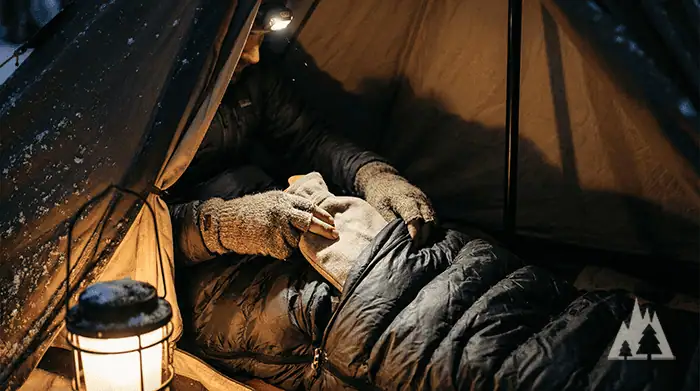
Be incredibly careful with this. A UCO candle lantern (which encloses the flame in glass and metal) can raise the temperature of a small tent by about 5 to 10 degrees. It also burns off some ambient humidity.
- Safety Check: Never leave it burning while you sleep. Use it to warm the tent while you change clothes and read, then blow it out before eyes-shut.
What NOT To Do (Safety Warnings)
Desperation leads to bad decisions. Here is what you should avoid when trying to figure out how to keep your tent warm in winter without electricity.
- Never bring a stove inside: Using a Jetboil or MSR stove inside a tent to heat it is a death wish. Carbon Monoxide (CO) is odorless and invisible. It builds up fast in small spaces. It’s not worth the risk.
- Don’t bury your face: When your nose gets cold, the instinct is to pull your head entirely inside the sleeping bag. Don’t. The moisture from your breath will dampen the insulation around your head and chest. Once down or synthetic fill gets wet, it stops working. Cinch the hood of the bag around your face, but keep your mouth and nose exposed to the air.
- Avoid Cotton: I said it before, but it bears repeating. Cotton kills. If you sweat in a cotton t-shirt, it gets clammy and sucks heat 25 times faster than air.
12 Practical Tips for the Frozen Camper
Here is your cheat sheet for your next trip:
1. Fluff Your Bag: As soon as you set up camp, unroll your sleeping bag. It needs time to “loft” (puff up) to trap heat effectively.
2. Change Your Socks: Never sleep in the socks you hiked in. Even if they feel dry, they have sweat in them. Put on fresh, thick wool socks dedicated to sleeping.
3. Eat Chocolate: Keep a Snickers bar in your sleeping bag pocket. If you wake up shivering, eat it. It’s instant fuel.
4. Exercise Before Bed: Do 25 jumping jacks before crawling into your bag. You want to generate heat *before* you get in, so the bag can trap it. Just don’t sweat.
5. Isolate Metal: If you keep your phone or flashlight in the bag, put them in a sock. Cold metal touching your skin will wake you up.
6. The “Spoon” Method: If you are with a partner, zip your bags together. Shared body heat is the most efficient heater in the world.
7. Boot Liners: Take the liners out of your boots and keep them in the sleeping bag with you so they are warm in the morning.
8. Invert Your Water: Store your water bottles upside down. Water freezes from the top down. This ensures the threads don’t freeze shut.
9. Floor Carpets: Bring a yoga mat or a rug for the tent floor if you have the space.
10. Reflectix: Buy a roll of Reflectix (bubble wrap foil insulation) from a hardware store. Cut it to the shape of your sleeping pad for a massive warmth boost.
11. Keep Tomorrow’s Clothes Warm: Stuff tomorrow’s base layers into your sleeping bag. Changing into freezing cold clothes in the morning is a morale killer.
12. Hand Warmers: Chemical hand warmers (HotHands) are great. Throw one near your kidneys and one by your toes.
Winter camping is Type 2 fun. It’s challenging while you’re doing it, but the memories are incredible. The silence of a snow-covered forest is something everyone should experience at least once.
Don’t let the fear of the cold stop you. If you respect the weather, insulate your sleep system, and keep your belly full, you’ll find that a tent in January can be surprisingly cozy.
Start with a backyard test run or a car camping trip close to home. Test your gear, figure out your layers, and see what works for you. Just remember: stay dry, stay off the ground, and for the love of everything, don’t hold your pee.